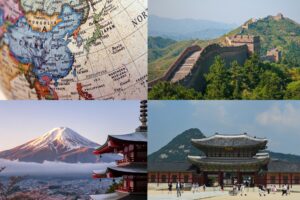






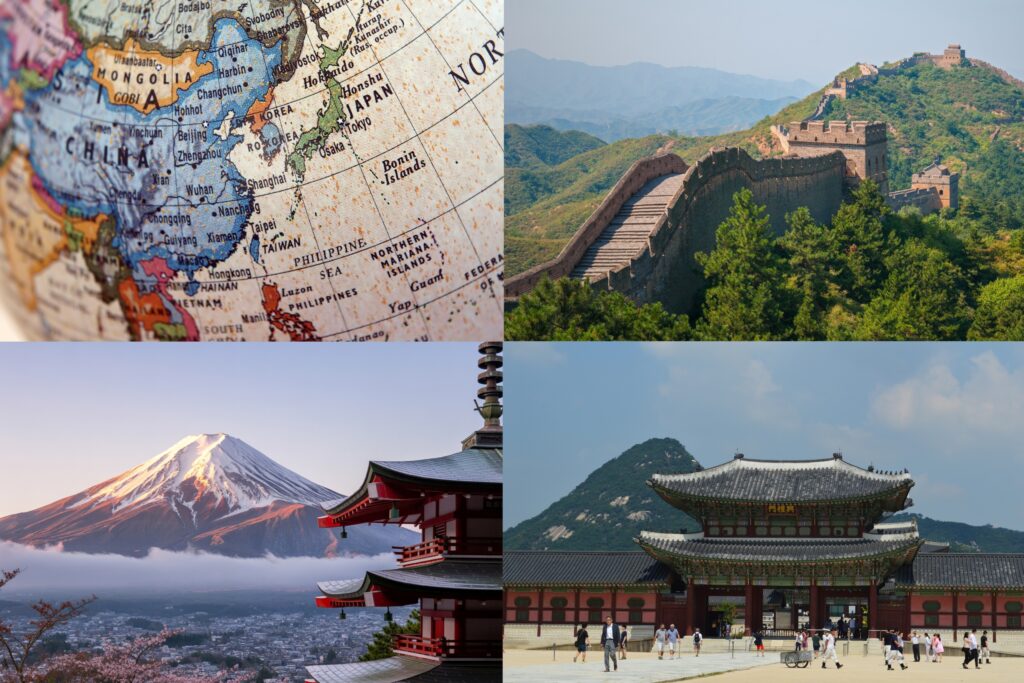
East Asia is one of the most culturally rich, most visually extraordinary, and most gastronomically rewarding travel regions on the planet — a collection of countries whose ancient civilizations have produced some of humanity’s most sophisticated art, architecture, philosophy, and culinary traditions, and whose contemporary cities are simultaneously among the most modern, most technologically advanced, and most efficiently navigable urban environments available to any traveler whose appetite for the specific combination of deep historical heritage and cutting-edge contemporary culture is most completely satisfied in the places where those two qualities coexist with the particular intensity that centuries of accumulated cultural achievement and decades of extraordinary economic development together produce. Japan, China, South Korea, and Taiwan are each distinct cultural worlds whose specific character, whose specific cuisine, and whose specific tourist experiences are as different from each other as they are collectively different from anywhere else in the world — yet they share the specific quality of the East Asian cultural tradition whose Confucian social values, whose Buddhist and Taoist spiritual heritage, whose specific aesthetic sensibility in everything from garden design to food presentation, and whose specific relationship between the ancient and the contemporary creates the distinctive atmosphere that makes East Asian travel an experience unlike any available in any other region of the world. This guide explores the culture, the cuisine, and the most essential tourist destinations of East Asia’s four most visited countries — providing the foundation for the most informed, most respectful, and most genuinely enriching travel experience available in this extraordinary part of the world.
Japan: Ancient Temples, Modern Neon, and the World’s Most Refined Food Culture
Japan occupies a unique position in the global travel imagination — the country whose specific combination of ancient ceremonial culture and hypermodern urban life, of the bamboo-screened tea house and the seventy-story glass tower, of the thousand-year-old temple and the world’s most sophisticated convenience store creates the specific quality of temporal layering that no other country in the world quite replicates with the same completeness or the same seamlessness. Travel to Japan is consistently described by the people who have experienced it as one of the most profoundly affecting available — the country whose specific aesthetic of refined simplicity in everything from the presentation of a bowl of rice to the design of a train station, whose specific social values of consideration for others whose expression in the extraordinary public courtesy and the extraordinary cleanliness of the environment, and whose specific relationship with beauty whose cultivation in every dimension of daily life from the wrapping of a department store purchase to the raking of a temple garden creates the cumulative experience of a culture that has thought very seriously and very carefully about how to make daily life as beautiful and as considerate as it can possibly be.
Tokyo: The World’s Greatest City
Tokyo is the largest metropolitan area in the world and the most completely overwhelming urban travel experience available on any continent — a city of thirty-seven million people whose specific neighborhoods each have the distinct character, the distinct cuisine specialties, and the distinct cultural atmosphere of a separate city in their own right, creating the experience of a place whose full exploration would require months rather than the days that most travelers have available and whose specific quality of the inexhaustible discovery of new layers beneath every surface already encountered makes return visits not merely pleasant but genuinely necessary for any traveler whose first encounter with the city has created the specific appetite for more that the best travel destinations most consistently produce. Shibuya’s famous scramble crossing, Harajuku’s youth fashion culture, Shinjuku’s entertainment districts, Akihabara’s electronics and anime subculture, Asakusa’s ancient temple and traditional craft shopping, and the specific quiet of the imperial palace gardens whose green oasis in the middle of the world’s largest city creates the most dramatic available contrast between the ancient ceremonial landscape and the contemporary urban environment surrounding it — these are the Tokyo experiences whose individual quality is extraordinary and whose combination across even a few days of genuinely attentive exploration creates the most concentrated and the most varied urban travel experience available anywhere in the world.
Kyoto: The Soul of Traditional Japan
Kyoto is the city that most completely preserves and most completely expresses the traditional cultural heritage of Japan — the former imperial capital whose seventeen UNESCO World Heritage sites, whose hundreds of Buddhist temples and Shinto shrines, whose preserved geisha districts, and whose specific quality of the ancient ceremonial city that has maintained its historic character against the pressures of modernization more completely than any other major Japanese city creates the travel experience of genuine encounter with the Japan of history rather than the Japan of the contemporary present that Tokyo most completely represents. The Arashiyama bamboo grove whose towering green stalks create the most photographed natural corridor in all of East Asian travel, the Fushimi Inari shrine whose thousands of vermilion torii gates climb the forested hillside in the tunnel of red that is one of the most visually dramatic architectural experiences available in the entire world, and the Gion district whose preserved wooden machiya townhouses and whose occasional glimpse of a geisha in full traditional dress creates the most direct available encounter with the specific living heritage of traditional Japanese culture — these are the Kyoto experiences whose quality of genuine immersion in the ancient cultural landscape of one of the world’s great civilizations most completely fulfills the specific travel aspiration that Japan most consistently inspires.
Japanese Cuisine: The World’s Most Refined Culinary Tradition
Japanese cuisine is the most awarded, the most internationally respected, and by many critical assessments the most technically sophisticated food culture in the world — the culinary tradition whose specific combination of the quality obsession whose expression in the extraordinary standards of ingredient sourcing, preparation precision, and presentation aesthetic creates the specific category of eating experience that no other national food culture quite matches in the completeness of its sensory engagement with every dimension of the dining experience from the selection of the seasonal ingredient to the arrangement of the finished dish in the specific vessel whose shape and whose glaze complement the food’s color and texture in the way that the Japanese concept of the complete aesthetic experience most completely demands. Ramen, sushi, tempura, yakitori, udon, soba, shabu shabu, tonkatsu, okonomiyaki — the breadth of the Japanese culinary repertoire across every price point from the seven-dollar bowl of perfectly crafted ramen at the counter of a tiny neighborhood shop to the multi-course kaiseki dinner whose seasonal ingredients and whose multi-course progression of small, exquisite dishes represents the highest expression of traditional Japanese culinary art available in any restaurant setting — creates the specific food travel opportunity that makes Japan the destination whose culinary experience consistently exceeds the expectations of even the most food-traveled visitor.
China: The Empire of History, Diversity, and Culinary Abundance
China is the world’s oldest continuous civilization and the travel destination whose specific quality of historical depth — the scale of the archaeological and architectural heritage whose remnants span more than five thousand years of continuous cultural development across a geographic territory larger than the continental United States — creates the most consistently awe-inspiring encounter with human history’s longest-running and most consequential story available in any single country on earth. The specific challenge of Chinese travel is the challenge of its scale — the country whose geographic, cultural, and culinary diversity across its thirty-one provinces and autonomous regions creates the experience of traveling through multiple distinct countries rather than a single unified destination requires the specific itinerary planning whose thoughtful approach to the available time and the available destinations produces the most focused and the most genuinely enriching Chinese travel experience rather than the superficial dash through the most famous sites whose inadequacy relative to the country’s full complexity is most keenly felt by the traveler who has allocated insufficient time for the depth of engagement that this extraordinary country most deserves.
Beijing: The Imperial Capital
Beijing is the city where the scale and the ambition of Chinese imperial civilization is most completely and most dramatically expressed — the capital whose Forbidden City complex, the largest preserved palace complex in the world, was the center of Chinese imperial power for five centuries and whose nine thousand rooms, whose ceremonial axes, and whose specific quality of the planned imperial city whose every architectural element was designed to communicate the cosmic mandate of the emperor whose authority it housed creates the most overwhelming single architectural experience available in the entire East Asian travel landscape. The Great Wall whose nearest accessible sections at Mutianyu and Badaling are within two hours of Beijing is the travel and tourism experience whose specific combination of the physical achievement of walking the wall’s steep ascending and descending staircases with the intellectual enormity of the historical undertaking whose construction employed hundreds of thousands of laborers across centuries creates the most personally significant encounter with human ambition and human labor available in the entire repertoire of world heritage tourism. Tiananmen Square, the Temple of Heaven whose ceremonial complex where the Ming and Qing emperors performed the annual rituals of heaven worship that legitimized their rule creates the most direct available encounter with the specific spiritual and political cosmology of traditional Chinese imperial culture, and the hutong neighborhoods whose narrow alleyways between traditional courtyard houses preserve the specific texture of pre-modern Beijing life in the middle of one of the world’s great contemporary capitals complete the Beijing experience whose range from the grandest imperial architecture to the most intimate neighborhood streetscape encompasses the full span of the city’s extraordinary historical depth.
Chinese Cuisine: Eight Regional Traditions That Span a Continent
Chinese cuisine is not a single culinary tradition but a collection of eight major regional food cultures whose specific characters are as distinct from each other as French cuisine is from Spanish, whose shared Chinese identity is the family resemblance that connects them rather than the uniformity that the Western world’s frequent reduction of Chinese food to a single category most commonly and most inaccurately implies. The fiery, numbing heat of Sichuan cuisine whose peppercorn-heavy spicing creates the specific tingle-burn sensation that no other culinary tradition quite replicates, the delicate, seafood-centered freshness of Cantonese cuisine whose dim sum tradition is the most widely known expression of the broader southern Chinese culinary culture outside China itself, the sweet-sour balance of Shanghainese cuisine whose braised pork belly is one of the most celebrated single dishes in all of Chinese cooking, and the imperial refinement of Beijing cuisine whose Peking duck is the most famous Chinese dish in the world and whose careful preparation across the multiple stages of the roasting process creates a culinary experience whose quality and whose ceremony together make it among the most complete single-dish dining occasions available in any food culture — these are the regional expressions whose exploration across the breadth of Chinese travel creates the most genuinely diverse culinary education available in any single country’s cuisine.
South Korea: K-Culture, Ancient Palaces, and the World’s Most Exciting Street Food
South Korea has emerged in the past decade as one of the most culturally dynamic and most internationally celebrated travel destinations in all of East Asia — a country whose specific combination of the ancient Joseon dynasty heritage whose five grand palaces in central Seoul, whose traditional hanok village neighborhoods, and whose Buddhist temple complexes in the mountain landscapes outside the major cities preserve the specific cultural heritage of the five-hundred-year kingdom that created many of the most distinctive elements of Korean cultural identity, and the contemporary cultural phenomenon of K-pop, K-drama, and the broader Korean Wave whose global spread has created the most passionate and the most internationally distributed fan travel motivation available in any country’s cultural exports, creates the specific travel destination whose appeal spans the full range from the cultural heritage tourist to the contemporary pop culture pilgrim in the specific way that no other East Asian country quite replicates.
Seoul: Ancient and Ultra-Modern in Perfect Balance
Seoul is the city where the specific coexistence of the ancient and the contemporary is most dramatically expressed — the capital where the fourteenth-century Gyeongbokgung Palace sits within walking distance of the gleaming glass towers of the Gangnam financial district, where the thousand-year-old Buddhist temple Jogyesa is surrounded by the coffee shops and boutiques of the Insadong cultural district, and where the Cheonggyecheon stream whose restoration through the middle of the city center has created the most beloved urban public space in Seoul’s contemporary landscape runs through a city whose energy, whose nightlife, whose street food markets, and whose specific quality of the young, creative, intensely fashionable urban culture that has made it the most culturally influential city in East Asia for the generation of young people whose K-pop and K-drama consumption has made Korean culture the most globally distributed East Asian cultural product available in the contemporary entertainment landscape. The Bukchon Hanok Village whose preserved traditional wooden houses with their curved roof tiles create a neighborhood of extraordinary visual character in the middle of the modern city, Myeongdong’s shopping and street food district whose energy and variety make it the most concentrated sensory experience available in any single Seoul neighborhood, and the specific experience of the late-night street food market whose tteokbokki, hotteok, and the full range of Korean street food specialties are best experienced in the specific atmosphere of the market whose outdoor communal eating culture is as essentially Korean as any cultural experience the country provides complete the Seoul experience whose diversity and whose energy make it the most comprehensively rewarding East Asian capital city for the traveler whose interests span the historical, the cultural, and the gastronomic in equal measure.
Korean Cuisine: Bold Flavors and the Art of Fermentation
Korean cuisine is the most fermentation-forward, the most communally structured, and in the opinion of a growing number of the world’s most respected food critics, the most excitingly flavored of all the East Asian culinary traditions — the food culture whose specific characteristic of the banchan spread, the collection of small shared side dishes including the various kimchi preparations, the seasoned vegetables, the savory pancakes, and the braised dishes whose collective presentation alongside the main dish creates the most generous and the most visually abundant table setting available in any restaurant dining context, creates the specific communal eating experience that Korean food culture most completely expresses and that the solo traveler, the couple, and the group all encounter in the same generous form regardless of the size of the party sharing the table. Korean barbecue, whose tabletop grilling of marinated meats including bulgogi and galbi over charcoal or gas creates the most participatory and the most socially interactive dining experience available in East Asian restaurant culture, bibimbap whose colorful arrangement of rice, vegetables, and egg in the stone bowl creates the most visually distinctive presentation in the Korean culinary repertoire, and the kimchi jjigae stew whose fermented cabbage and pork combination creates the specific complex, sour-spicy depth of flavor that the long fermentation of Korean cuisine’s most essential ingredient most completely enables are the Korean food experiences whose encounter in the specific context of a Seoul restaurant or a Korean home table creates the culinary memories that the travelers who have had them most consistently describe as among the most satisfying and the most distinctively flavorful of their entire East Asian journey.
Taiwan: The Heart of Chinese Culture in a Small Island Paradise
Taiwan occupies the most surprising position in the East Asian travel landscape — a small island whose geographic compactness conceals the extraordinary diversity of its cultural heritage, its natural landscapes, and its culinary tradition, and whose specific character as the destination that has preserved the most complete version of traditional Chinese culture while simultaneously developing its own distinct Taiwanese cultural identity and its own extraordinary contemporary food scene creates the specific travel experience of a place that exceeds expectations so consistently and so dramatically that the travelers who have visited invariably describe it as the most underrated destination in all of East Asia. Taiwan’s combination of the accessible, genuinely warm hospitality whose reputation among East Asian travelers is as firmly established as Japan’s and whose specific quality of the approachable, English-friendly, genuinely delighted to welcome foreign visitor culture creates the most comfortable and the most relaxed foreign travel experience available in the region, the extraordinary natural landscape of the mountainous interior whose Taroko Gorge is the most dramatic natural spectacle in the entire East Asian travel landscape, and the night market food culture whose concentration in the most vibrant and most varied street food scene available in any single country creates the most accessible and the most genuinely exciting culinary travel experience available in East Asia.
Taipei and Taiwan’s Night Markets: The Food Lover’s Paradise
Taipei is a city whose specific character is most completely expressed through its food — the night markets whose concentration in the Shilin, Raohe, and Ningxia districts create the most vivid, most aromatic, and most gastronomically varied street food environments available in any East Asian city, and whose specific offerings of oyster vermicelli, stinky tofu, beef noodle soup, scallion pancakes, bubble tea, and the full range of the Taiwanese street food repertoire whose individual specialties are each worth a dedicated journey create the specific food travel experience that professional food writers and passionate amateur eaters consistently identify as the most rewarding single city food destination available in the entire region. The National Palace Museum whose collection of more than seven hundred thousand pieces of Chinese imperial art represents the most complete repository of Chinese cultural heritage available anywhere in the world and whose specific treasures including the Jadeite Cabbage and the Meat-Shaped Stone are among the most visited museum objects in the entire world, the Longshan Temple whose incense-wreathed interior and whose specific atmosphere of the living religious practice that continues in one of Taipei’s oldest and most beloved temples creates the most direct available encounter with the traditional spiritual culture of Taiwan, and the Elephant Mountain hike whose forty-minute ascent produces the most celebrated panoramic view of the Taipei skyline including the iconic Taipei 101 tower complete the Taipei experience whose combination of world-class cultural institutions, living religious heritage, and the most exciting street food scene in Asia makes it the most comprehensively rewarding destination in the travel and tourism landscape of East Asia for the visitor whose interests span the full range of the cultural, the spiritual, and the gastronomic that this extraordinary region most completely and most generously provides.
Conclusion
East Asia is the travel region that rewards the curious, the respectful, and the genuinely open traveler with experiences whose depth, whose beauty, and whose specific quality of encounter with the living heritage of some of humanity’s greatest and most enduring civilizations is matched by no other region in the world with equivalent consistency or equivalent completeness. The ancient temples and the neon skylines of Japan, the imperial grandeur and the culinary continent of China, the K-culture dynamism and the ancient palace heritage of South Korea, and the warm hospitality and the night market abundance of Taiwan together create the most diverse, the most culturally rich, and the most gastronomically rewarding regional travel experience available on any continent — a journey whose specific rewards are felt not merely in the moments of the most dramatic visual and culinary encounters but in the cumulative, daily, ordinary experience of a region whose specific quality of care for the aesthetic, the social, and the culinary dimensions of daily life creates the travel and tourism experience of a world whose civilization has thought more deeply, more carefully, and more consistently than perhaps any other about what it means to live beautifully, to eat well, and to inhabit the physical and cultural landscape with the specific reverence and the specific refinement that the best of East Asian civilization has always most completely and most enduringly expressed.